What Is a Self-Lubricating Bearing?
A self-lubricating bearing is a precision mechanical component engineered to operate under load and relative motion without requiring the continuous external application of oil or grease. Instead of relying on a separate lubrication system, the bearing material itself contains solid lubricants — typically polytetrafluoroethylene (PTFE), graphite, molybdenum disulfide, or oil-impregnated bronze — that migrate to the bearing surface during operation to form a continuously replenished lubricating film between the bearing and the mating shaft or housing. This fundamentally different approach to friction management eliminates the lubrication maintenance cycle that conventional rolling element and plain bearings require, reducing the total cost of ownership across the bearing's service life.
The practical implications of self-lubricating technology extend well beyond simple maintenance savings. In applications where conventional lubrication is technically impossible — submerged environments, high-temperature zones, clean-room facilities, or locations with no maintenance access — self-lubricating bearings make machinery designs feasible that would otherwise require complex sealed lubrication systems or frequent disassembly for regreasing. For design engineers selecting bearing solutions, the self-lubricating bearing represents a convergence of reduced manufacturing costs, shorter production time for the end product, improved operational efficiency, and environmental protection through the elimination of lubricant waste and contamination risk.
Core Advantages Over Conventional Bearing Solutions
The commercial and technical case for specifying self-lubricating bearings over conventional lubricated plain bearings or rolling element bearings is built on several concrete, quantifiable advantages that accumulate over the full product lifecycle. Understanding these advantages in specific terms helps procurement engineers and machine designers build the business case for self-lubricating bearing adoption in new and existing applications.
- Elimination of lubrication infrastructure: Grease nipples, oil reservoirs, centralized lubrication systems, and the labor associated with regular regreasing schedules are removed entirely, simplifying machine design and reducing assembly complexity and bill-of-materials cost.
- Extended service intervals: Self-lubricating bearings do not require periodic lubrication replenishment, dramatically extending maintenance intervals and reducing machine downtime in production environments where unplanned stops are costly.
- Environmental protection compliance: The absence of oil and grease lubrication eliminates lubricant leakage, contamination of process streams, and disposal requirements — advantages that are particularly significant in food processing, pharmaceutical manufacturing, and environmentally sensitive applications.
- Performance in extreme conditions: Self-lubricating materials retain their tribological function across temperature ranges, humidity levels, and contamination exposures where conventional lubricants would degrade, oxidize, wash out, or freeze.
- Quiet operation: The solid lubricant film formed during operation produces lower friction noise than oil-film or rolling element bearing systems, benefiting applications in office equipment, household appliances, and automotive interior mechanisms.
Product Range: Types of Self-Lubricating Bearings
A comprehensive self-lubricating bearing program covers multiple product geometries and material systems to address the full diversity of industrial application requirements. Each bearing type within the product family serves a specific load direction, mounting configuration, and operating environment, and selecting the correct type for each application is as important as selecting the correct material grade.
Standard Self-Lubricating Bearings
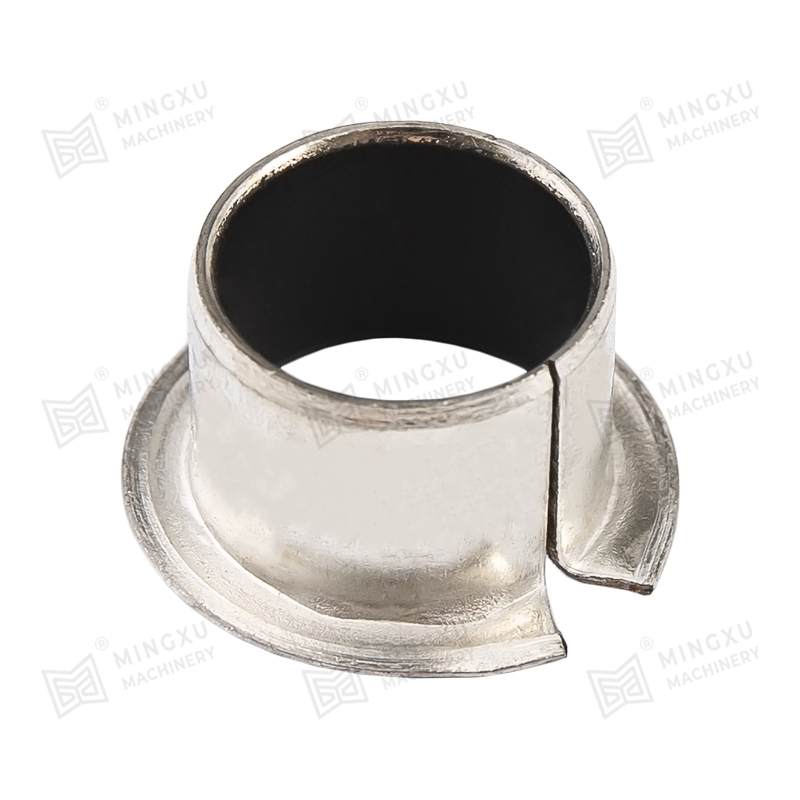
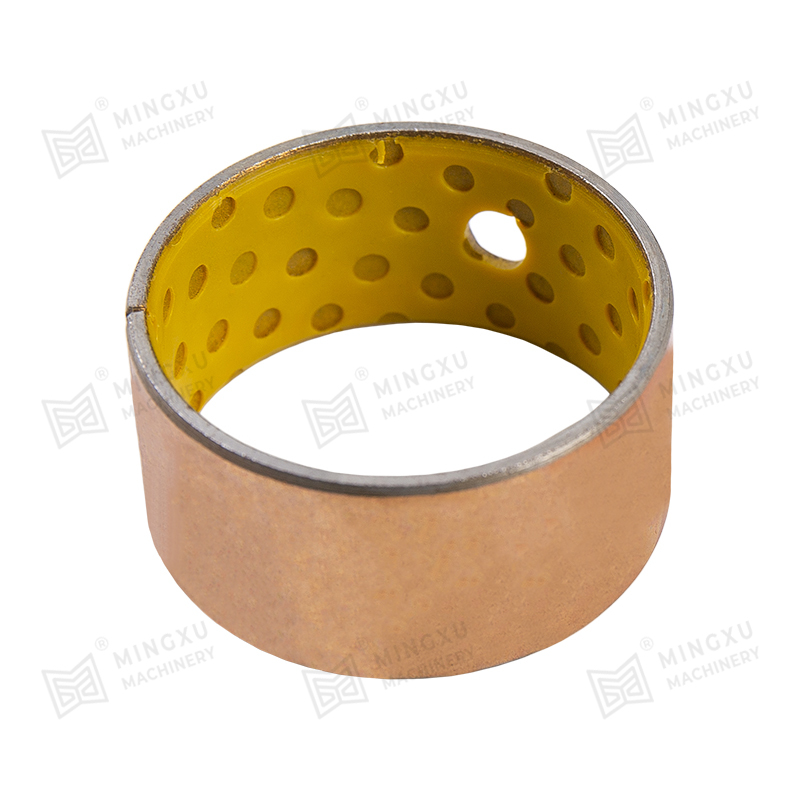
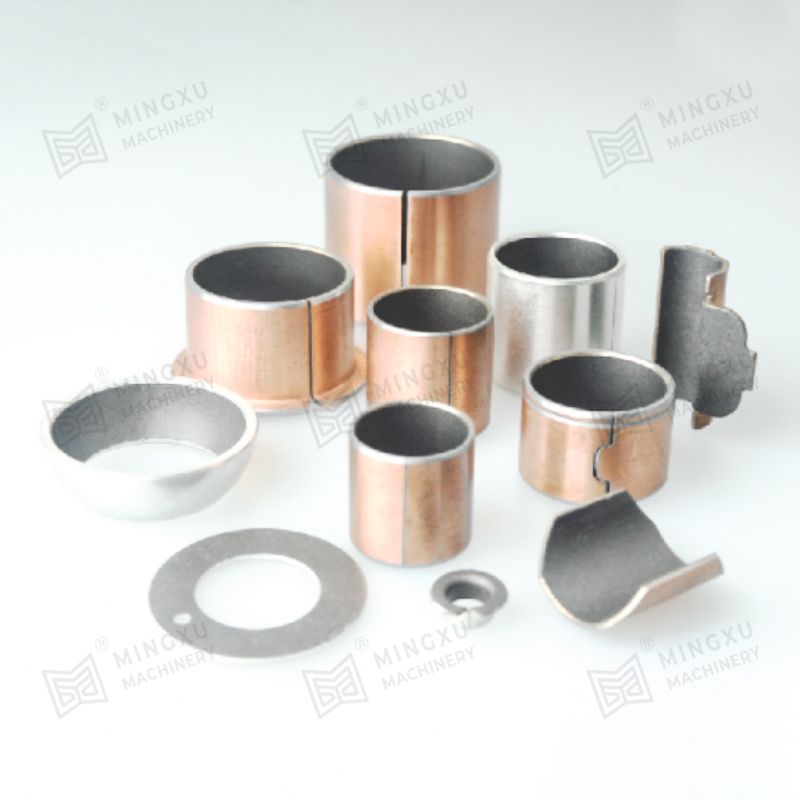
Standard self-lubricating bearings are cylindrical plain bearing bushes produced from a composite or sintered material that incorporates solid lubricant throughout the bearing wall thickness. The most common construction is a three-layer composite: a steel backing for structural support, a sintered bronze interlayer for mechanical bonding and thermal conductivity, and a PTFE-lead or PTFE-fiber surface layer that provides the self-lubricating interface. These bearings carry radial loads in rotating and oscillating shaft applications and are dimensionally interchangeable with conventional bronze bushings, allowing direct replacement without housing modification.
Flange Self-Lubricating Bearings
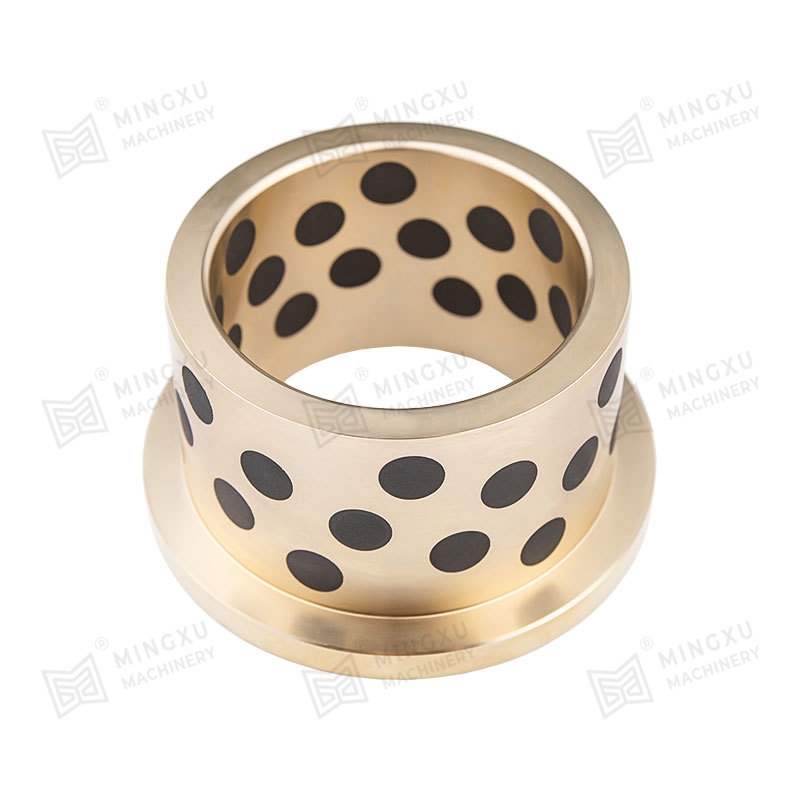
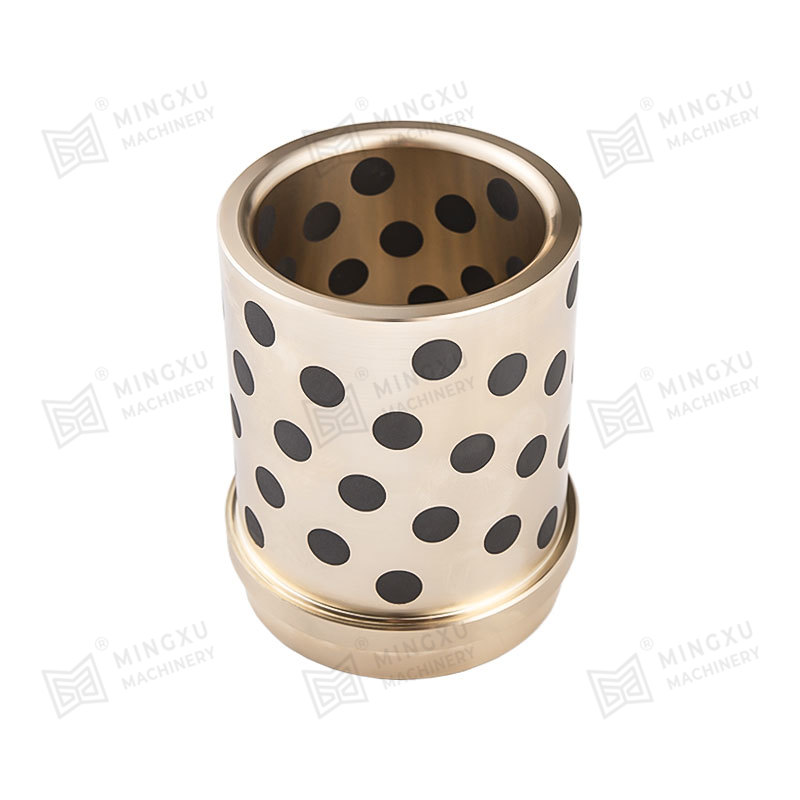
Flange self-lubricating bearings incorporate an integral radial flange at one end of the cylindrical bearing body. The flange serves as a combined radial and axial locating surface, positioning the bearing axially within its housing and carrying thrust loads transmitted along the shaft axis. This combined load capability makes flange self-lubricating bearings particularly valuable in applications where shaft end-play must be controlled, such as linkage pins, hinge mechanisms, and actuator pivot points in automotive and agricultural machinery. The flange also simplifies press-fit installation by providing a positive stop depth reference during assembly.
Thrust Washers
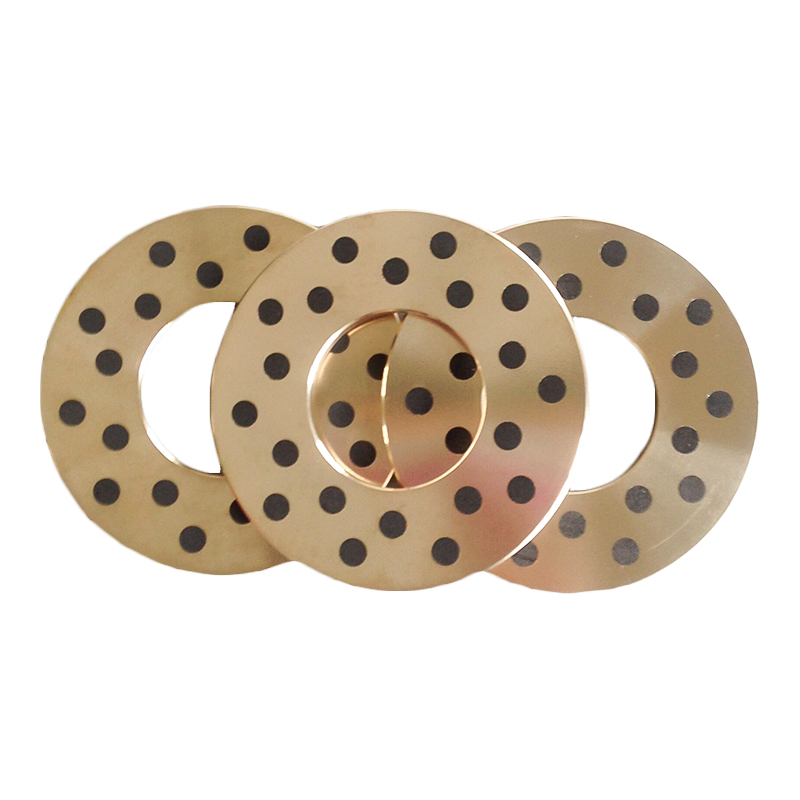
Thrust washers are flat annular components designed to carry axial loads between two rotating or oscillating surfaces. In self-lubricating form, they are produced from the same composite material systems used in cylindrical bearings, with the self-lubricating surface facing the moving component. Thrust washers are widely used as low-friction spacers in gearboxes, between rotating flanges, and in any mechanism where axial load must be managed without rolling element thrust bearings. Their thin profile and simple geometry make them straightforward to integrate into existing designs and inexpensive to replace during scheduled maintenance.
Self-Lubricating Bearing Bushes
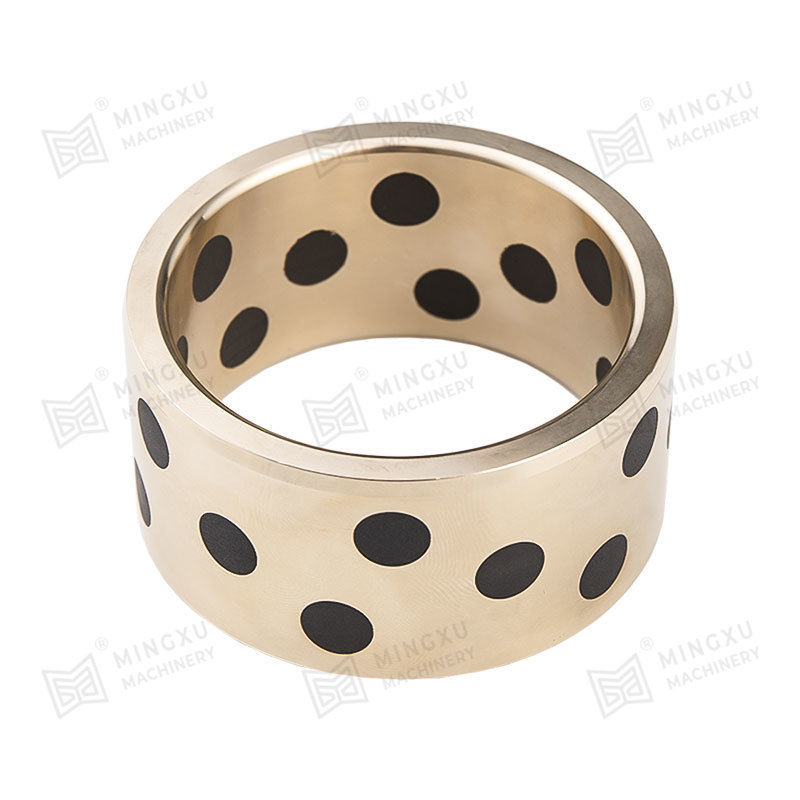
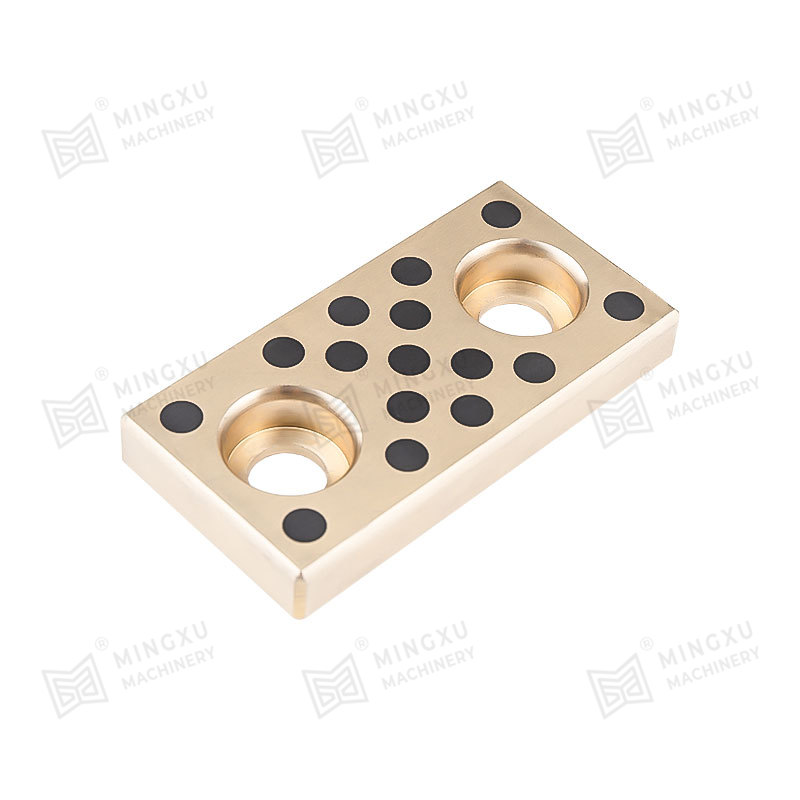
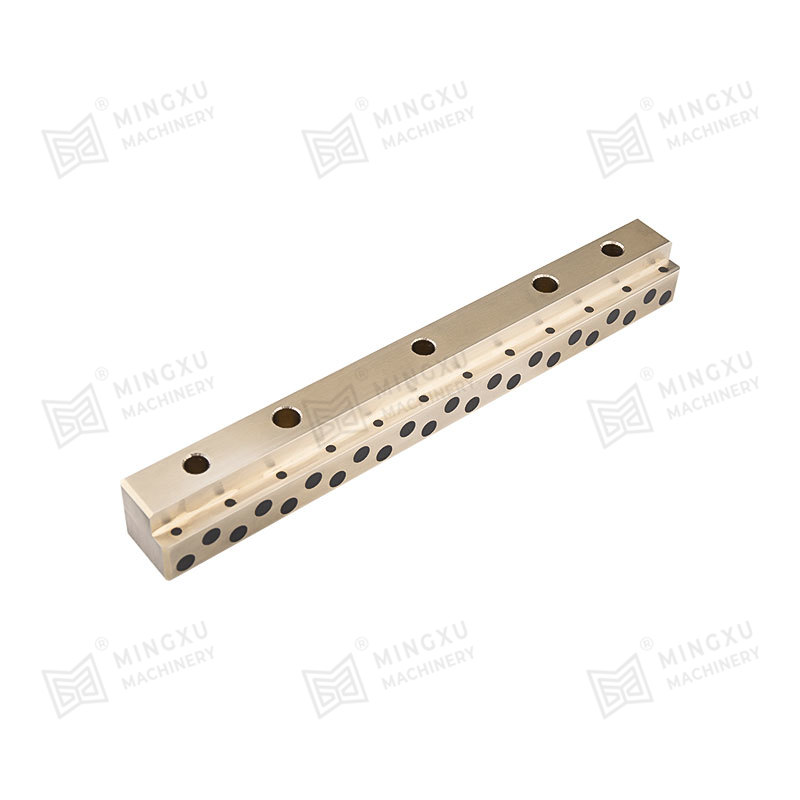
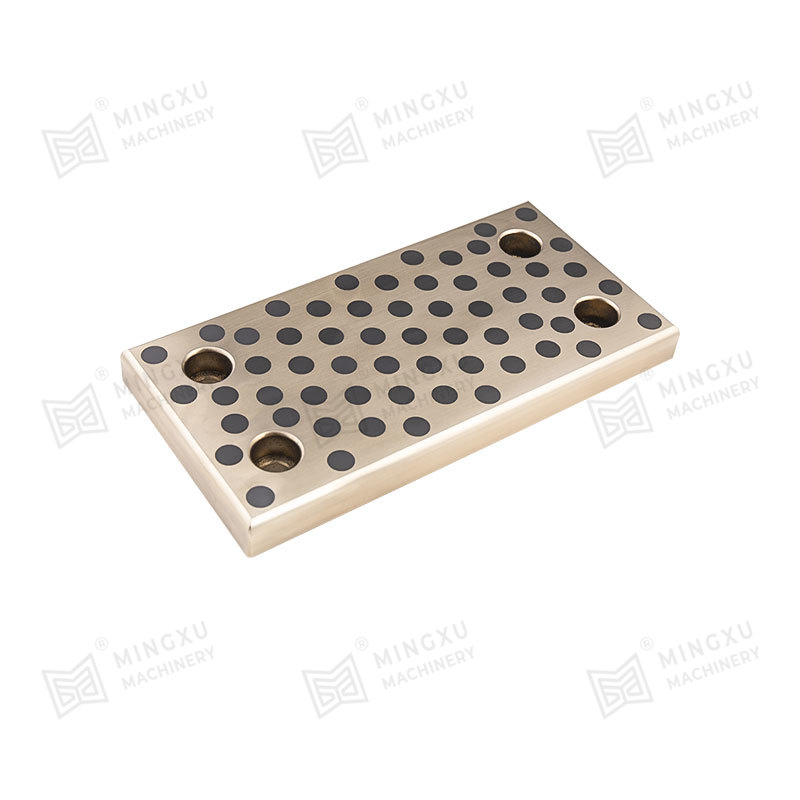
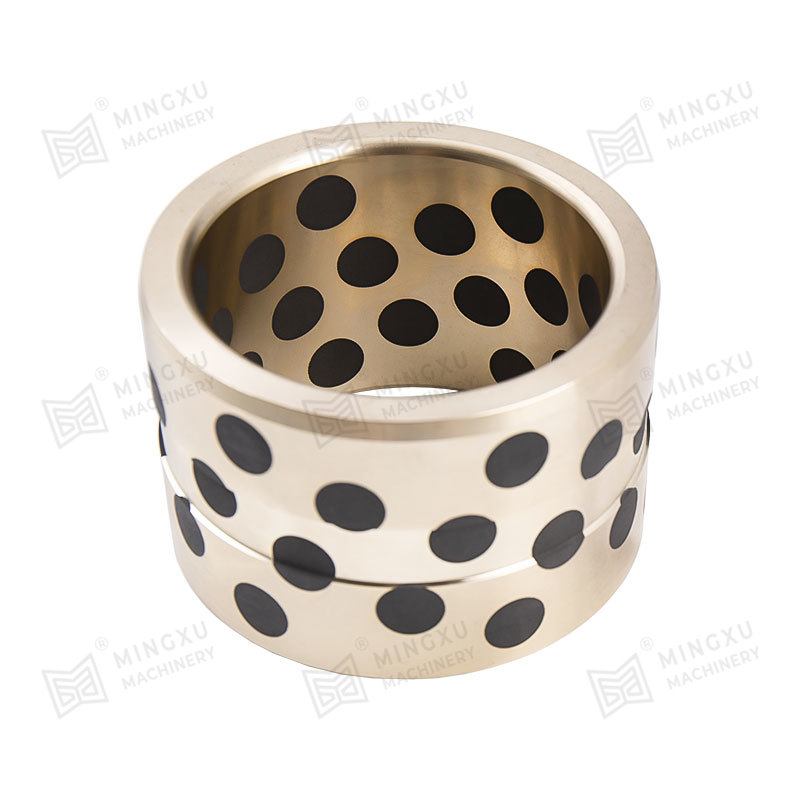
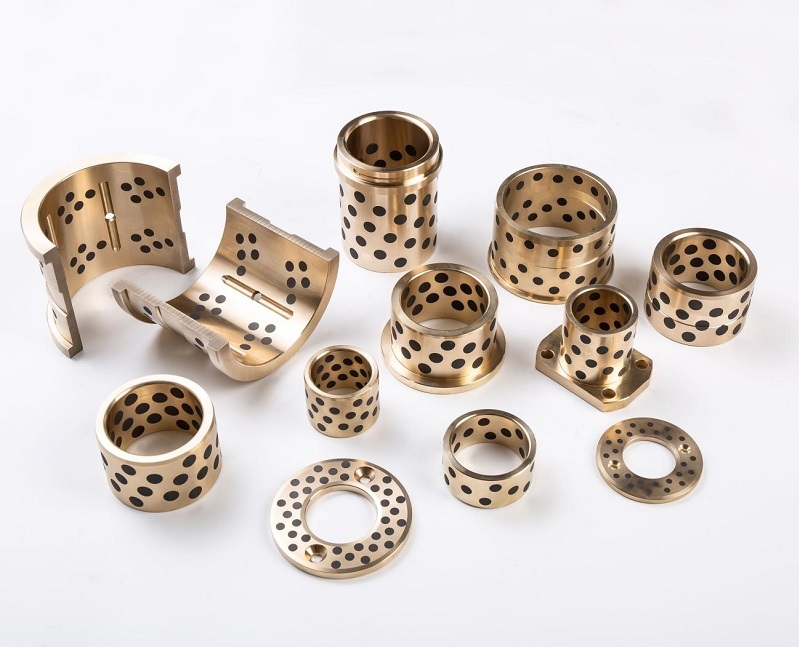
Self-lubricating bearing bushes encompass a broader range of plain bearing geometries produced in solid bronze, bimetal, or polymer composite materials with embedded solid lubricant reservoirs. Graphite-plugged bronze bushings — in which cylindrical graphite inserts are press-fitted into precisely machined holes distributed across the bearing surface — represent a particularly robust form of self-lubricating bearing bush, capable of operating at elevated temperatures where PTFE composite bearings would exceed their thermal limits. These bushings are the preferred solution in steel mill equipment, glass manufacturing machinery, and other high-temperature heavy industry applications.
Self-Lubricating Spherical Bearings
Self-lubricating spherical bearings combine the angular misalignment accommodation of a spherical plain bearing with a PTFE composite or fabric liner on the spherical contact surface, eliminating the need for the periodic relubrication that conventional spherical bearings require. The liner material transfers to the mating ball surface during operation, maintaining a continuous solid lubricant film that supports oscillating motion under high loads and significant angular misalignment simultaneously. These bearings are standard components in aerospace structural joints, heavy truck steering linkages, bridge expansion joints, and hydraulic cylinder pin connections.
Casting Bronze Bearings
Casting bronze bearings are produced by casting tin bronze, aluminum bronze, or leaded bronze alloys into near-net-shape bearing geometries, then finish-machining to precise dimensional tolerances. Bronze's inherent combination of moderate hardness, good thermal conductivity, corrosion resistance, and natural lubricating properties makes it a durable and reliable bearing material for moderate-speed, high-load applications. Casting bronze bearings are the preferred choice for large-diameter, slow-moving applications such as hydraulic press guide bushings, ship stern tube bearings, bridge bearing pads, and heavy crusher shaft supports where the large dimensions make sintered or composite bearing manufacture impractical.
Material and Manufacturing Standards
The performance reliability of self-lubricating bearings in demanding industrial service is only achievable when material quality and manufacturing precision are controlled to rigorous standards throughout the production process. High-precision CNC machine tools are essential for maintaining the bore diameter tolerances, surface finish values, and perpendicularity requirements that determine whether a bearing will achieve its designed load and life performance in service. Bore tolerances for precision self-lubricating bearings are typically specified to H7 or tighter, with surface roughness values on the sliding surface controlled to Ra 0.4 µm or better to ensure uniform solid lubricant transfer and minimal running-in wear.
Quality management system compliance with ISO 9001 standards provides the framework for process control, incoming material inspection, in-process dimensional verification, and finished product testing that ensures consistent bearing quality across production batches. For customers specifying self-lubricating bearings in critical applications — aerospace, nuclear, marine, or automotive safety systems — ISO 9001 certification from the bearing supplier is a baseline requirement that provides documented assurance of process capability and traceability from raw material to finished component.
Industry Applications Across Demanding Sectors
The breadth of industries that rely on self-lubricating bearing technology reflects the universal value of maintenance-free, contamination-free friction management across mechanical systems of every scale and complexity. The following table maps the primary application sectors to the bearing types and operating conditions most commonly encountered in each:
| Industry Sector |
Key Operating Conditions |
Recommended Bearing Type |
| Automobile manufacturing |
High cycle, vibration, compact space |
Flange self-lubricating, composite bush |
| Heavy industry & machinery |
High load, slow speed, contamination |
Casting bronze bearing, graphite-plugged bush |
| Ships & marine |
Waterproof, corrosion, continuous load |
Casting bronze, self-lubricating spherical |
| Mining |
Shock load, abrasive dust, wet conditions |
Graphite bronze bush, flange bearing |
| Bridges & civil structures |
Long service life, no maintenance access |
Self-lubricating spherical, casting bronze |
| Chemical & energy industry |
Chemical exposure, high temperature |
PTFE composite bush, thrust washer |
Selecting the Right Self-Lubricating Bearing for Your Application
Correct self-lubricating bearing selection requires a systematic evaluation of the application's load, speed, temperature, environmental exposure, and dimensional constraints against the performance parameters of available bearing materials and geometries. The primary selection variables — load capacity expressed as allowable PV (pressure × velocity) rating, maximum operating temperature, chemical compatibility of the bearing material with the process environment, and dimensional envelope defined by the shaft and housing geometry — must all be satisfied simultaneously for a bearing specification to be technically valid.
For applications in high temperature environments, graphite-plugged casting bronze bearings or high-temperature PTFE composite grades rated to 280°C or above are specified. For waterproof or submerged applications in ships and marine equipment, corrosion-resistant bronze alloys or glass-fiber-reinforced PTFE composites provide the combination of water resistance and self-lubrication required. For automobile manufacturing applications demanding high cycle life in compact geometries, thin-walled three-layer composite self-lubricating bearings offer the best combination of load capacity, dimensional efficiency, and production cost. Consulting with a bearing specialist who can evaluate the full application context — rather than selecting on a single parameter — produces the most reliable and cost-effective bearing specification for every design challenge.




 English
 Español






Contact Us