Effective predictive maintenance and condition monitoring for graphite sliding bearings in critical machinery are essential for ensuring optimal performance, minimizing downtime, and extending service life. Here are some methods and techniques used to monitor the condition of these bearings:
Vibration Monitoring
Vibration sensors can be used to detect changes in the operating condition of graphite sliding bearings. Any increase in vibration or unusual patterns in vibration frequency could indicate issues such as misalignment, wear, or debris accumulation within the bearing.
Advanced signal processing (e.g., FFT analysis) can be employed to analyze vibration data for early signs of failure or wear. Monitoring changes in the amplitude, frequency, and phase of vibrations helps in identifying wear patterns or potential mechanical failures before they become critical.
Acoustic Emission Monitoring
Acoustic emission (AE) sensors detect high-frequency sounds produced by friction, wear, or other stresses within the bearing. Changes in sound frequency or intensity can indicate the onset of wear, cracking, or other damage.
By analyzing the acoustic signals, operators can assess the condition of graphite bearings and predict when maintenance is needed, preventing unexpected breakdowns.
Temperature Monitoring
Thermocouples or infrared sensors can monitor the temperature of graphite sliding bearings during operation. Excessive temperature rise often indicates increased friction or wear. Since graphite has good thermal conductivity, temperature monitoring can provide valuable insights into the bearing's performance and help prevent overheating.
Thermal mapping of the bearings, especially under variable load conditions, can help detect hot spots that might indicate excessive wear, misalignment, or lubrication failure.
Wear Particle Monitoring
Monitoring for wear particles or debris in the lubricant (if used) or within the bearing itself is an effective method for predictive maintenance. As graphite bearings wear down, fine particles may be released, which can be detected using magnetic particle sensors, optical sensors, or oil sampling.
The presence of wear particles in lubricants or around the bearing can indicate a gradual decline in bearing condition, which can trigger maintenance actions before failure occurs.
Load and Pressure Monitoring
Load sensors or strain gauges can be applied to graphite sliding bearings to measure the load distribution and detect any abnormal pressure or stress levels that could affect performance. Overloading or uneven pressure distribution can lead to increased wear and failure.
Pressure sensors in hydraulic or pneumatic systems that utilize graphite bearings can provide early warnings if the bearing is experiencing too much stress or uneven force.
Lubrication Monitoring (If Applicable)
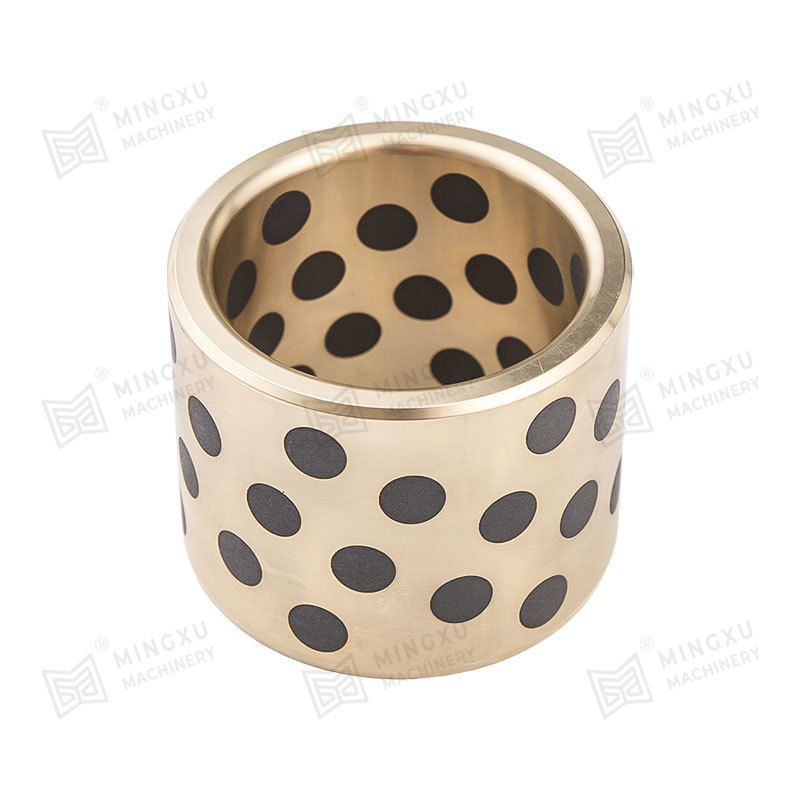
While graphite bearings are typically self-lubricating, in cases where lubrication is used or if external lubrication is still required, monitoring the quality of lubrication is vital. This includes viscosity analysis, contamination detection, and lubricant degradation.
Lubricant condition monitoring can alert operators to issues such as low lubricant levels or contamination, which could accelerate wear in graphite sliding bearings.
Visual Inspection and Ultrasonic Testing
Regular visual inspections can help identify visible signs of wear, misalignment, or cracks in graphite sliding bearings. This can include checking for surface damage, deformation, or corrosion.
Ultrasonic testing can be used to detect internal damage or delamination within the graphite material. This non-destructive testing method can identify early-stage problems, such as fractures, voids, or material degradation, that are not visible through traditional inspection methods.
Condition-Based Monitoring Systems
Integrated condition monitoring systems combine multiple sensors (e.g., temperature, vibration, wear particles) and use data analytics to assess the health of graphite sliding bearings. These systems can automatically analyze the data in real-time and provide alerts when performance metrics deviate from predefined thresholds.
Predictive analytics can be applied to forecast potential failures by analyzing historical data and recognizing patterns in bearing degradation, enabling more accurate predictions of when maintenance is needed.
Predictive Modeling and Data Analytics
By leveraging historical performance data, machine learning algorithms and predictive modeling can be applied to forecast the remaining useful life (RUL) of graphite sliding bearings based on factors such as load, temperature, vibration, and wear history.
Artificial intelligence (AI) can enhance predictive maintenance by learning from past bearing performance and recognizing subtle patterns that might otherwise go unnoticed, leading to more accurate maintenance predictions.
Sensor Fusion and IoT Integration
Internet of Things (IoT) sensors can be integrated into graphite sliding bearings to continuously monitor their condition and communicate data in real-time to a central control system. This enables remote monitoring and provides a holistic view of the health of critical machinery.
Sensor fusion involves combining data from multiple sources (e.g., temperature, vibration, pressure) to provide a more comprehensive and accurate assessment of the bearing's condition, improving predictive maintenance strategies.




 English
 Español





Contact Us